
Where is Psilocybin Therapy Legal in 2026?
Learn where psilocybin therapy is legal in 2026 and what participants should know before pursuing treatment.
Medical Review: Key Takeaways
Decriminalization doesn’t necessarily mean a safe therapeutic environment.
Retreat settings vary, so you’ll want to consider the process and clinical quality.
Research plays an important role in psilocybin laws.
The Legal Status of Psilocybin Therapy in 2026
Where is psilocybin therapy legal? This is an important question for anyone interested in therapeutic psychedelic experiences. Despite the growing body of research indicating the varied benefits of psilocybin therapy, legal forms of this treatment aren’t widespread (at least not yet).
While, of course, psilocybin mushrooms grow naturally all over the world, and can be cultivated easily, this doesn’t mean someone can replicate psilocybin therapy on their own. Moreover, despite easy access to psilocybin mushrooms, they may still remain illegal in the country in which they’re picked or grown.
For these reasons, many people who want to experience the mental health benefits of psychedelic therapy will prefer legal psilocybin therapy. This article will point you to where psilocybin is legal and what this treatment involves.
What is Psilocybin Therapy?
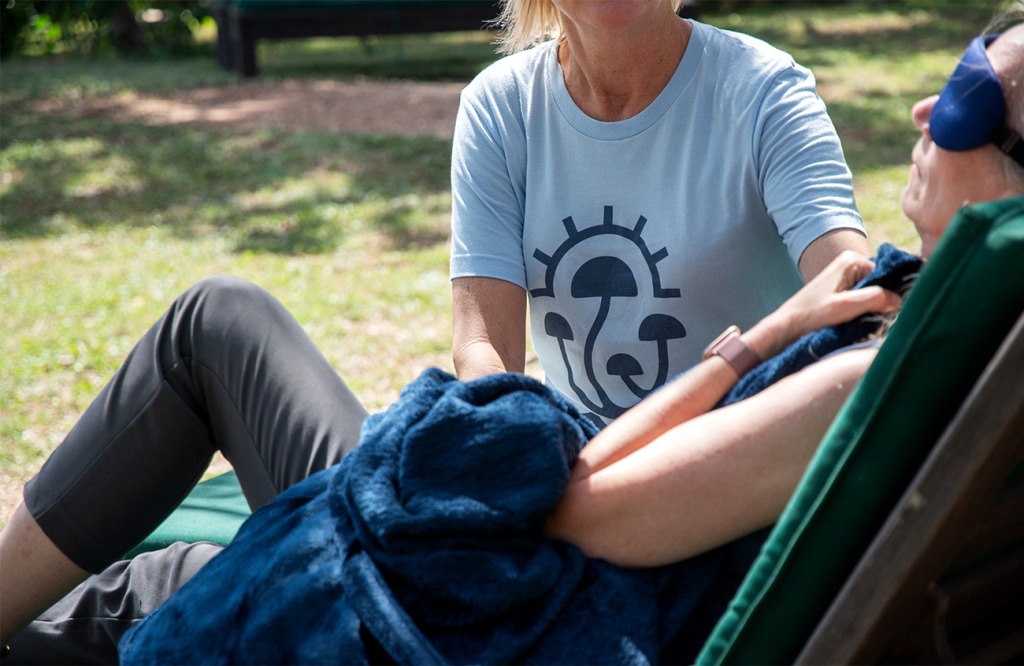
Psilocybin therapy involves taking synthetic or natural psilocybin in the presence of (typically) two therapists, normally one male and one female. The purpose of the treatment is to alleviate the distress associated with a mental health condition, such as depression, anxiety, or PTSD.
Clinical trials on psilocybin therapy have led to certain protocols relating to best practices. These include a playlist that augments the altered states; the wearing of an eye mask to encourage a deeper, introspective journey; preparatory sessions with a therapist before the dosing sessions; integration sessions after the dosing sessions; the use of moderate to high doses; and the encouragement for the participant to “trust, let go, be open” during altered states.
Through these protocols, participants who undergo legal psilocybin therapy have personally and spiritually rich experiences. It is the quality of these experiences that many researchers and facilitators believe drives therapeutic outcomes.
Why Psilocybin Therapy Laws Are Changing Worldwide
Since the 1970s, psilocybin has remained illegal in most of the world. And in most countries, it has sat in the most prohibited category of drugs (e.g., Schedule I in the US). This means governments in these countries, for decades, have created laws based on the position that psilocybin has no medical value and a propensity to lead to abuse.
Modern psychedelic research has challenged these long-held assumptions, which have lumped in psychedelics with drugs of abuse such as heroin, cocaine, and methamphetamine. Based on the mental health benefits that have been steadily proven through research, and a very low risk of abuse and physical harm, psilocybin therapy is increasingly becoming legalized.
Is Psilocybin Therapy Legal in the United States in 2026?
Psilocybin therapy is not legal federally in the US. It is not (yet) an FDA-approved treatment, so it is not accessible across the US. Federal law requires drugs to be approved as safe and effective by the FDA. If and when psilocybin therapy gains FDA approval – which could possibly happen in the next two years – the treatment can then be utilized and marketed across the US.
However, the lack of FDA approval doesn’t mean that legal psilocybin therapy doesn’t exist in the US. Outside of federal legalization, psilocybin therapy has been legalized in certain jurisdictions (with more campaigns underway that aim to achieve the same in other states and cities).
US States and Cities with Legal Psilocybin Therapy Programs
| State | Status | Program type | Available since |
|---|---|---|---|
| Oregon | Legal | Licensed service centers; non-medical supervised use | 2023 |
| Colorado | Legal | Licensed healing centers + personal use decriminalized | 2024 |
| New Mexico | Legal (Dec 2026) | Medical model; qualifying conditions only | Dec 2026 |
| 18 other states | Active legislation | Various bills under review | TBD |
Psilocybin therapy is legal and available in the states of Colorado and Oregon. Here is an overview of the differences between the programs available in these states:
Psilocybin Therapy in Oregon
- Psilocybin use outside of licensed therapy is not permitted. Psilocybin therapy is only available at licensed service centers.
- Psilocybin therapy is separated from other medical treatments, which means that licensed psilocybin service centers cannot offer this service alongside treatments such as diagnosis and psychotherapy. If someone wants these treatments alongside psilocybin therapy, they need to be sought outside a psilocybin service center. However, preparation and integration can be offered by psilocybin facilitators at service centers.
Psilocybin Therapy in Colorado
- Psilocybin use is permitted outside of licensed therapy, as the state decriminalized natural psychedelics for personal use, which also includes psychedelics besides psilocybin mushrooms, such as mescaline-containing cacti.
- Psilocybin therapy can be offered in more varied settings, including private residences (under strict rules).
- The law allows psilocybin therapy to be integrated with other mental health services, such as psychotherapy. This means that both supervised psilocybin experiences and psychotherapy with a licensed mental health professional can be delivered at the same clinic.
Psilocybin therapy will also soon be legal in New Mexico, although the rules and regulations surrounding the treatment are still being worked out, and it won’t be available until December 2026.
There is also active legislation in the following states (meaning psilocybin therapy could soon be legalized): Alaska, Georgia, Illinois, Indiana, Iowa, Kansas, Kentucky, Maine, Massachusetts, Minnesota, New Hampshire, New York, North Carolina, Rhode Island, Utah, Vermont, Virginia, and West Virginia.
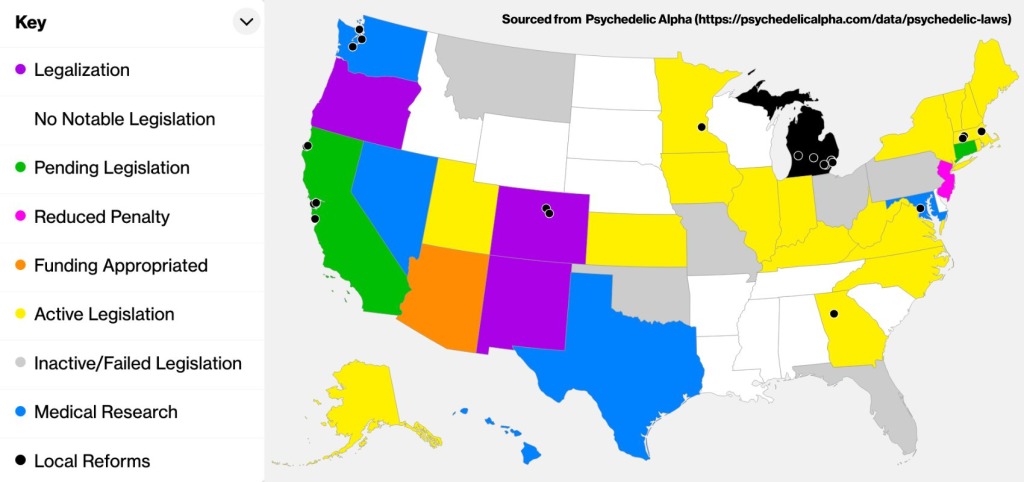
Below is a map that shows the various levels of legalization, active legislation, clinical research, reform, and more for psychedelics (including psilocybin therapy) within the United States on a state-by-state basis.
Where is Psilocybin Therapy Legal Outside of the US?
| Country | Status | Access model |
|---|---|---|
| Jamaica | Fully legal | No restrictions; retreat model widely available |
| Netherlands | Fully legal (truffles) | No restrictions; retreats widely available |
| Australia | Legal (medical) | TRD & PTSD; licensed psychiatrists only |
| Canada | Legal (medical) | Special Access Program; severe/life-threatening conditions |
| Switzerland | Legal (compassionate) | Compassionate use since 2014; severe conditions |
| Germany | Legal (clinical) | Restricted clinical access |
| Czechia | Legal (clinical) | Restricted clinical access |
| Portugal / Spain | Decriminalized | Personal use; cultivation/sale still illegal |
Psilocybin is fully legal in Jamaica and the Netherlands, meaning there are no specific requirements for accessing psilocybin therapy legally or for how practitioners must provide it. As a result, these are the countries where psilocybin retreats have become the most popular.
Psilocybin therapy, as practised in the medical model, seen in clinical trials, is legal – for the treatment of certain conditions – in Australia, New Zealand, Czechia, Germany, Canada, and Switzerland.
Psilocybin is also decriminalized in Portugal and Spain. This means that the cultivation and sale of psilocybin mushrooms is still illegal, but criminal penalties have been removed for possession and use of them.
What “Legal” Actually Means in Psilocybin Therapy
When we refer to ‘legal’ psilocybin therapy, we mean that the use of the psychedelic psilocybin is being used in compliance with specific national or state laws. This might include the use of psilocybin for only certain conditions, such as treatment-resistant depression or end-of-life distress, which have not responded sufficiently to other treatments.
Psilocybin therapy clinics also need to meet certain requirements before they can obtain a license to operate, such as employing specific staff (e.g., psychiatrists, licensed facilitators), implementing safety protocols (e.g., screening clients), and ensuring adequate storage facilities for psilocybin and hygiene standards. Other requirements may include a certain number of preparatory and integration sessions.
Legal psilocybin therapy sessions take place in licensed facilities, clinics, hospitals, or retreats, not at home or in underground therapy sessions or retreats. Legal psilocybin therapy also involves supervision and guidance from one or more trained professionals (e.g., licensed therapists or national- or state-sanctioned facilitators).
Risks of Psilocybin Therapy Outside Legal and Regulated Settings
Legal psilocybin therapy, like any treatment, is not risk-free. However, it has safety protocols in place that minimize these risks as far as possible. Through adequate screening, preparation, and support during dosing and integration sessions, the vast majority of psychedelic therapy participants won’t experience any long-term issues as a result of treatment.
This is not to say that even rigorous clinical trials involve no adverse effects; sometimes, this can happen, and researchers are continually learning lessons from these cases.
Yet, many safety protocols are lacking outside of legal frameworks, which increases the chances of an adverse experience. When psilocybin therapy is carried out in an underground setting, the following risks may apply:
- If clients (or facilitators) are sourcing psilocybin, they may not be aware of the specific strain of mushroom or the potency of the mushrooms being used. In legal psychedelic therapy, in contrast, synthetic psilocybin allows for more accurate psilocybin dosing. Even when natural psilocybin is used, in the form of whole mushrooms or extracts, regulatory requirements lead to more precise dosing than using psilocybin mushrooms sourced from the black market, as cultivation environments are highly controlled and monitored by law. Psilocybin mushrooms are often tested for psilocybin content within legal jurisdictions. Without accurate dosing, participants may find themselves having a much more intense (and distressing) experience than expected.
- There is no requirement for a psychedelic therapist or facilitator to be licensed or to have received any training to gain appropriate qualifications to guide clients through psilocybin therapy. One potential risk of a lack of training is that guides aren’t equipped to safely administer different doses and the nuances involved in selecting the appropriate dose for a participant.
- There are no complaints or mediation processes in place in case an underground facilitator engages in unethical behavior.
- Psilocybin products are not tested: this is a problem because many ‘psilocybin’ products in the black market actually contain 4-AcO-DMT (which, while it most likely converts to psilocin in the body, it has different dosages than psilocybin and there is little research on it).
- There is no requirement for any number of preparatory or integration sessions to take place, or for therapeutic frameworks to be in place that ensure people are adequately prepared for the experience and have support following psilocybin therapy.
- It is easier for unscrupulous practitioners to operate in underground settings, which makes it difficult to know who is trustworthy. This worry is not an ideal way to enter a psilocybin therapy session.
The Future of Psilocybin Therapy Legislation
If FDA-approved, psilocybin therapy would be available to all citizens of the US. This FDA approval would also mean that someone could potentially use their medical insurance plan to cover the costs of treatment.
However, there are campaigns in other countries that are calling for the medical legalization of psilocybin, including the United Kingdom. If psilocybin therapy were more widely legalized and accessible, this would make it easier for those who need it most to access this treatment.
Understanding Psilocybin Therapy Laws is Essential Before Participation
If you want to feel safe and confident in a psilocybin therapy program and the facilitators leading it, then it’s essential to understand the legal context. Not understanding this could lead to unexpected practices or oversights (which you may have assumed wouldn’t have occurred).
In a fully legal setting, high ethical and safety standards are in place, which make malpractice far less likely. Without an understanding of the legal context, one might also overlook the possible legal ramifications of possessing and using psilocybin if something were to go wrong. In a worst-case scenario, this could lead to criminal prosecution, penalties, or a criminal record.
Joining a legal psilocybin therapy program, offered by MycoMeditations, for example, means that you can be free of any of those worries. Rather than stressing about how to navigate psilocybin therapy’s complex legal environment, our psilocybin retreats ensure total legal compliance and the highest therapeutic standards, allowing you to put all your focus into your healing, which is what matters most.
FAQs About Psilocybin Therapy Legality in 2026
Where is psilocybin therapy legal in 2026?
Psilocybin therapy is legal in the following US states: Colorado, Oregon, and New Mexico. It is also legal in Australia, New Zealand, Czechia, Germany, Canada, and Switzerland under stricter medical access.
What’s the difference between decriminalization and legalization?
Decriminalization means that someone won’t receive criminal penalties for possessing or using (certain amounts of) psilocybin products. The cultivation, sale, and marketing of such products are still outlawed. Legalization, in contrast, means that growing, selling, and marketing psilocybin products is not prohibited.
Can people legally participate in psilocybin therapy today?
Yes, but only in the jurisdictions noted above. Outside of these states and countries, participating in psilocybin therapy may be decriminalized or illegal, with varying criminal penalties in the latter case, depending on the jurisdiction.
How do international laws for psilocybin differ from US regulations?
Internationally, psilocybin is a controlled substance under the UN's 1971 Convention on Psychotropic Substances. This requires member nations to prohibit general use, allowing it only for strict medical or scientific research. This contrasts with some US regulations, in states such as Colorado and Oregon, which allow limited legal access to psilocybin therapy due to state-sanctioned psilocybin therapy programs.
How might psilocybin therapy laws change in the future?
Many US states have active legislation related to psilocybin therapy, so it’s likely that, in the near future (i.e., the next couple of years), we will see more states legalizing this treatment. In the near future, we may also see more European nations legalize psilocybin therapy. However, these legislative changes, including how quickly or slowly they occur, depend in large part on the pace of research.